%20(2).png)

Ian White sat down with Brett Ungashick, CEO of OutSail to talk about where ChartHop is headed, how AI is changing what's possible for HR teams, and why the bar for software is going up across the board.
The conversation covered a lot of ground: product focus, agentic AI, permission controls, and the bigger shift happening across the software market. We pulled out four clips worth watching, with context on why each one matters.
When you're building a platform, the temptation to expand is constant. Every customer asks for adjacent features. Every new market looks reachable. The companies that do this well are the ones that know exactly where to draw the line.
Ian explained how ChartHop thinks about that tradeoff. For them, the test is simple: does this strengthen the core data model around workforce intelligence? If yes, build it. If not, integrate with someone who does it better.
That's why ChartHop works with ATS partners like Greenhouse and Ashby rather than building its own candidate experience. Keeping that boundary isn't a limitation. It's what keeps the AI useful, because the AI is only as good as the context it has access to.
Most HR teams already know what needs to happen. The hard part is getting it done.
Chasing down missing employee data. Following up on unsigned documents. Cleaning up records across systems. Reconciling onboarding tasks. None of it is glamorous. All of it eats time that should go toward planning, development, and decision-making.
Ian framed ChartHop's AI roadmap around this exact problem. The platform is moving from surfacing information to helping teams actually act on it. AI agents that can handle the tedious, repetitive operational work, so HR isn't stuck being reactive.
The shift he describes, from a system of intelligence to a system of action, is the right framing for where AI in HR is actually useful. Not grand strategic visions. Just clearing the path so the people doing the work can operate at a higher level. Check out the video clip here.
Here's a question worth sitting with: what's the real difference between ChartHop AI and just dropping your HR data into ChatGPT?
What if you just exported a CSV from your HRIS and put it into Claude? What are the actual risks of doing that?
Workforce data is some of the most sensitive information inside any organization. Compensation ranges. Performance history. Org structure changes. Promotion decisions. The wrong person seeing the wrong data, even accidentally, creates real problems.
Ian pointed to ChartHop's permissions engine as one of the platform's most important long-term investments. Access Guard controls visibility down to the individual data point. That's not a nice-to-have. When AI starts making recommendations and taking actions on people decisions, the guardrails matter as much as the capability.
Permission controls used to feel like a technical detail. In an agentic AI world, they're foundational.
There's been a lot of conversation in the market about "Is software dead?" Ian's answer cut through the noise.
Bad software might be dead.
If AI makes it easier to build something functional, then functional is no longer enough. The baseline moves. What differentiated products two years ago becomes table stakes. The new separation is about who has better data, better context, and better outcomes for the people using the product.
What stood out in this part of the conversation wasn't the analysis. It was Ian's energy. He's not worried about this shift. He's energized by it. He called this the biggest platform shift he's seen in decades of building software, and the most exciting moment to be doing it.
That perspective matters for HR and People leaders too. The tools available to you right now are genuinely better than anything that's existed before. The question is whether you're set up to take advantage of them.
The four clips above cover the highlights, but the full 26-minute interview is worth watching if you want the complete picture on where ChartHop is heading and how Ian thinks about building in this market.
Want to see how ChartHop AI works inside your organization? Learn more.



Evaluate AI HR tech vendors with confidence with these 15 critical questions that help you assess how AI is built, governed, and applied in real HR scenarios.

Use this free library of AI prompts designed for tools like ChatGPT and Ask ChartHop to streamline workflows, improve decision-making, and save time across hiring, onboarding, performance, and vendor evaluation. Built by and for HR leaders.
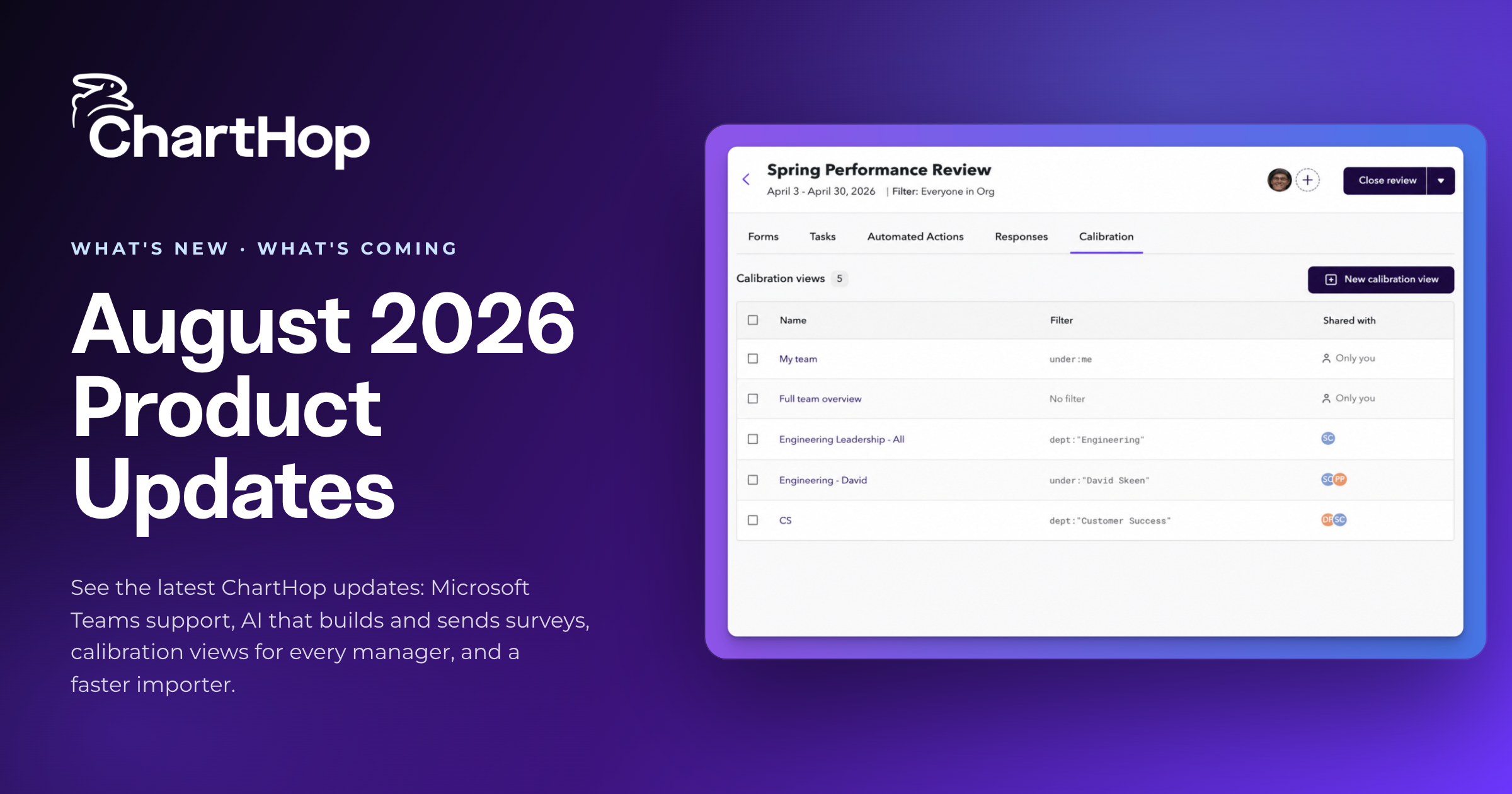
See the latest ChartHop updates for August 2026: Microsoft Teams support, AI that builds and sends surveys, calibration views for every manager, and a faster importer.

A practical playbook for putting AI agents to work in HR and people operations, from choosing the first workflow to setting guardrails and measuring results.

See how an HRIS and HCM differ, the core modules to expect, and 5 criteria mid-market teams should weigh before buying. Compare the top platforms for 2026.